
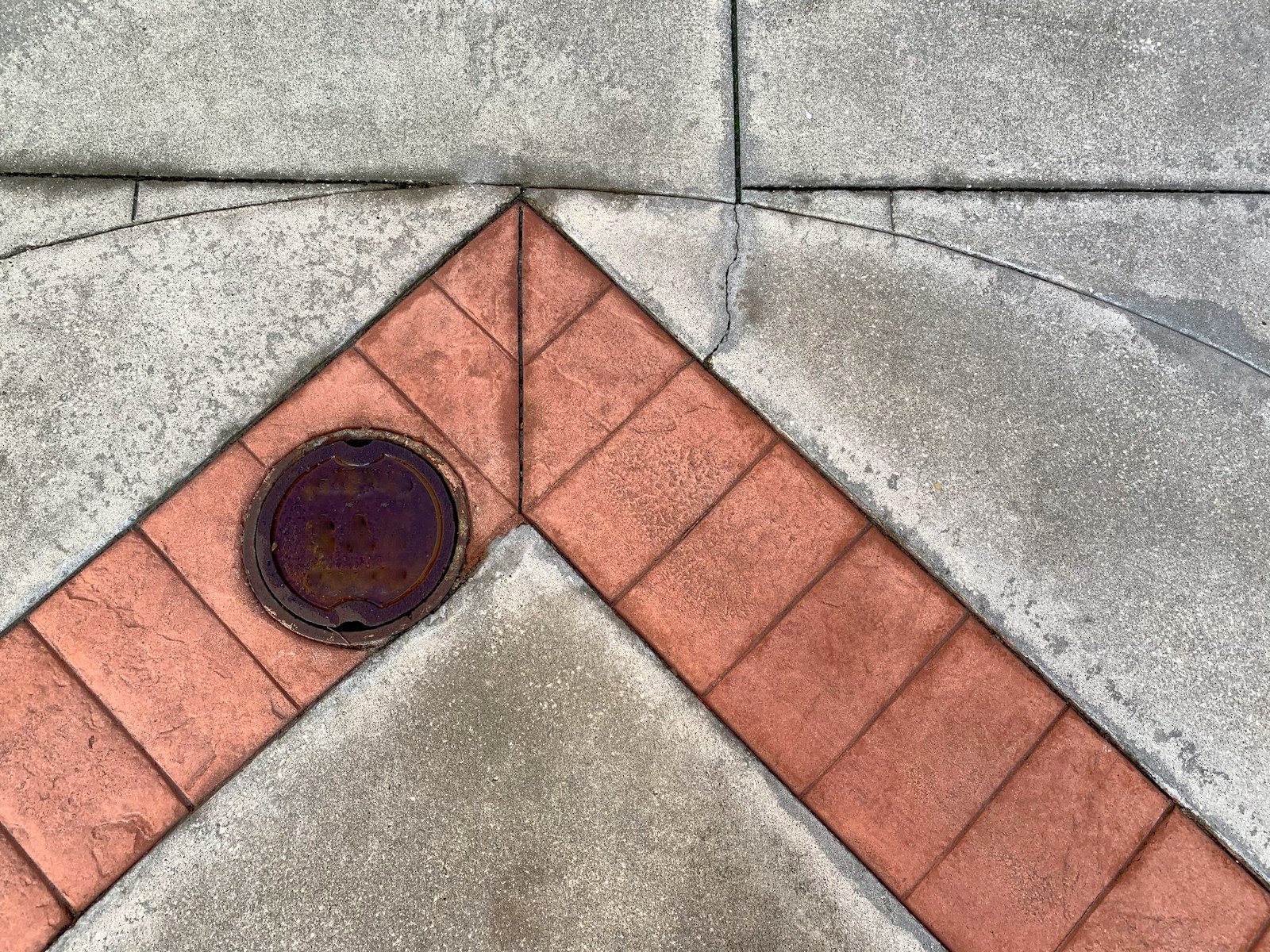

Dark marks on concrete after a rainy period may be algae, organic residue, dirt, mineral staining, mildew, or another surface condition. Not every dark mark is mold, and appearance alone cannot establish the cause. The shaded side of a home, a patio beneath trees, a damp joint, and a surface beside irrigation may show more growth than an exposed driveway.
Find the Moisture Source
Look for persistent shade, leaking hose connections, blocked drainage, overwatering, downspouts, and soil or mulch touching the concrete. Cleaning the mark without correcting the moisture source often leads to recurrence.
Clean Cautiously
Sweep loose material first. Test a compatible neutral cleaner in a hidden area and follow its label. Do not mix cleaning chemicals, use an aggressive acid, or apply a pressure setting that removes the surface paste from decorative concrete. Stamped and stained surfaces may require a method different from plain broom-finished concrete.
If the surface is sealed, confirm that the cleaner will not soften, haze, or strip the sealer. Avoid making broad health claims about an unidentified stain. When a property has a significant indoor moisture or air-quality concern, involve the appropriate specialist.
Repair the Underlying Condition
If water is ponding, the joint is open, the surface is spalling, or the slab has settled, cleaning is only the first step. A concrete professional can evaluate whether the solution is drainage correction, joint repair, resurfacing, sealing, or replacement.