
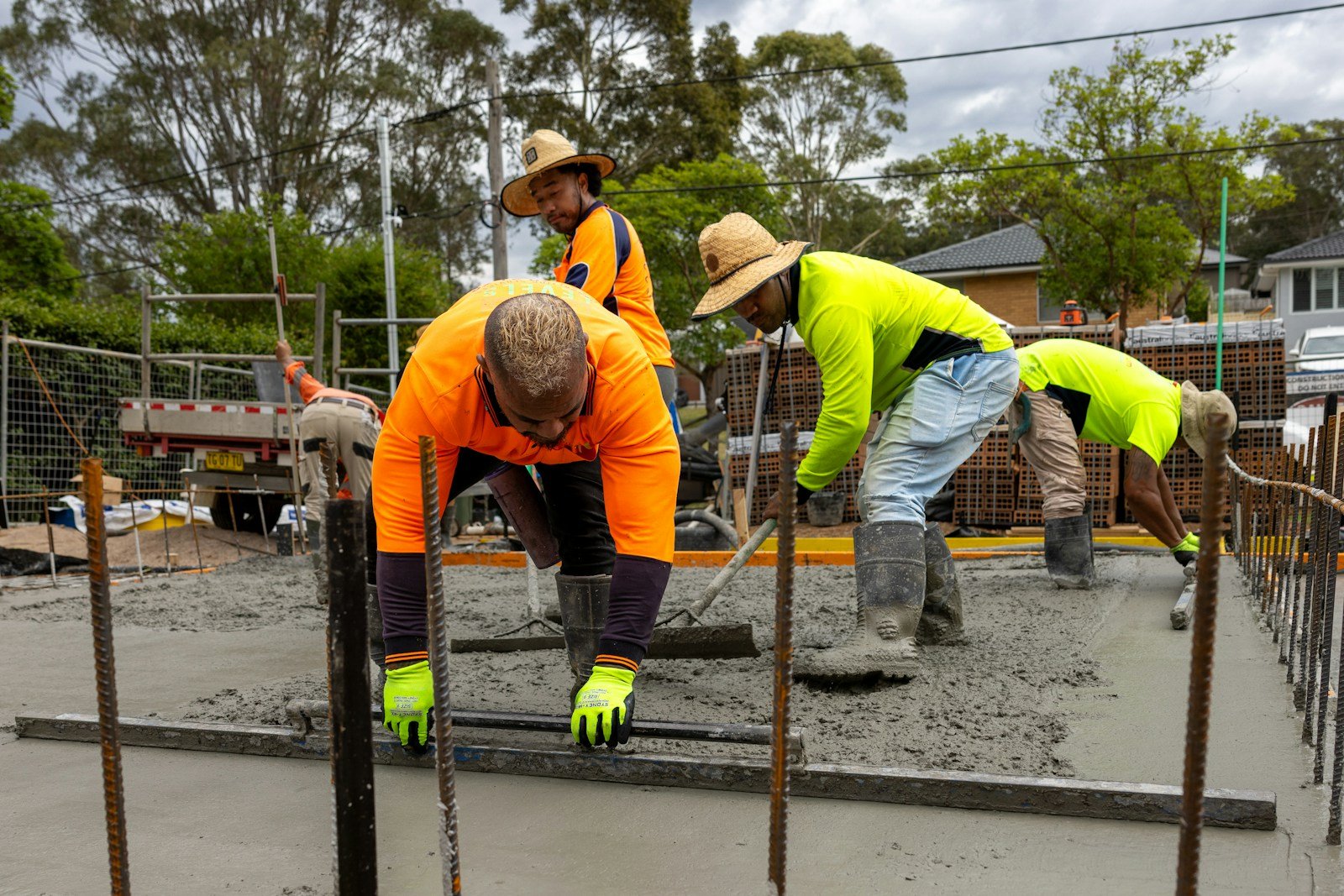

Best Time for Concrete Work in El Paso
You’re about to put several thousand dollars into a driveway, patio, or slab. If the pour lands in the wrong week, El Paso’s sun, wind, or a surprise monsoon storm can leave you with a surface that crazes, curls, or pits. The right window won’t save a sloppy crew, but it takes a lot of risk off a good one.
Call (915) 294-9961Get a Free Quote
Why timing matters more here
Concrete doesn’t dry. It cures, and that’s a chemical reaction that needs water and moderate temperatures. Our low humidity, strong sun, and spring wind can pull moisture off a fresh slab faster than the reaction can use it. The top layer ends up weaker than the concrete under it, and you see crazing (a web of fine cracks) or edges that curl up.
Cold causes the opposite problem. A pour that freezes before it sets can lose strength for good. Most of the failed slabs we get called to look at trace back to one of those two problems, not to a bad mix.
Wondering if your project fits the calendar? Tell us what you’re building and we’ll give you a straight answer. Call (915) 294-9961 or get a free quote.
The seasons at a glance
| Season | Typical window | In your favor | Watch for |
|---|---|---|---|
| Spring | Late March to May | Warm days, cool nights, plenty of finishing time | Spring wind dries surfaces fast, so curing still matters |
| Summer and monsoon | June to September | Long working days | 100°F+ heat speeds up setting; storms can hit a fresh slab with little warning |
| Fall | Late September to mid-November | The most forgiving window overall | Popular, so good dates go early |
| Winter | December to February | Cool air gives crews more working time | Overnight freezes need insulation or heat |
Want a pour date in the spring or fall window? Call (915) 294-9961 or get a free quote.
Spring and fall: the easy months
From the Westside out to Socorro and Horizon City, late March through May and late September through mid-November are the windows most crews like. Days are warm enough for a normal cure, nights rarely threaten a freeze, and nobody is racing the sun.
A wider margin isn’t the same as no margin, though. Low humidity means curing blankets, curing compound, or damp burlap still earn their keep.
Spring and fall dates fill first, so it helps to ask early. Call (915) 294-9961 or get a free quote.
Summer: it works, but it isn’t casual
When the afternoon hits 100°F, concrete can start to stiffen before the crew is ready for it. Summer pours go well when they’re planned around that: dawn starts, set-controlling admixtures, shade or wind protection where possible, and a finishing crew that doesn’t waste a minute.
Monsoon season, roughly July through September, adds a second problem. A fast storm can pit and wash an unprotected surface. A good contractor watches the radar, keeps tarps on the truck, and moves the start time when the sky looks wrong.
Have a summer project in mind? We’ll tell you how we’d schedule it. Call (915) 294-9961 or get a free quote.
Winter: possible, with a plan
Our winters are mild, but they aren’t freeze-proof. The hard freeze of February 2021 reminded a lot of people of that. If the temperature is expected to fall near or below 40°F before the concrete gains strength, the pour needs insulated blankets or a heated enclosure.
If your job lands between November and February, ask how the crew will protect it overnight. Then ask for the answer in writing.
Planning a winter pour? Ask us how we protect it. Call (915) 294-9961 or get a free quote.
What the calendar means for your project
- Driveways and patios: spring and fall give the cleanest finish with the least babysitting.
- Foundations and structural slabs: workable most of the year with the right crew. Skip mid-afternoon summer pours during active monsoon weather.
- Stamped and stained work: cooler months give the finisher time to get texture and color consistent.
Timing is only one piece. A driveway near the Mesa Street corridor isn’t planned the same way as a bigger lot in Horizon City or a valley-floor property in Socorro. Access, drainage, and the soil under the slab matter too, and our estimates are itemized so you can see what preparation and weather protection are included. For a price to go with the schedule, see our driveway cost guide.
Want a date and a price in the same visit? Call (915) 294-9961 or get a free quote.
Ready to schedule?
Call (915) 294-9961 for a free on-site estimate, in any season.
Call (915) 294-9961Get a Free Quote
Frequently asked questions
- How far in advance should I schedule a concrete pour in El Paso?
- Spring and fall dates fill fastest because they offer the most predictable curing conditions. Booking two to three weeks ahead gives you a better shot at your preferred window.
- Can concrete really be poured in El Paso’s summer heat?
- Yes. Early starts, set-retarding admixtures, and active moisture protection help crews manage hot, dry conditions. Summer pours just need more careful scheduling than spring or fall work.
- What happens if it rains during or right after a pour?
- Fresh concrete needs protection from monsoon rain until it’s set enough to resist surface damage. We watch the forecast and can cover an active pour or move the timing when storms are heading in.
- Does a winter pour need special treatment?
- Only when temperatures are near freezing. Insulation and, when needed, heat protect the pour while it gains enough strength to resist frost damage.
- Do you still offer free estimates outside the best pouring seasons?
- Yes. Concrete work can be scheduled year-round in El Paso with the right weather planning, and estimates are free in every season.
GET A FREE, NO-OBLIGATION ESTIMATE
FREQUENTLY ASKED QUESTIONS
Spring and fall dates fill up fastest since they’re the easiest months to get a clean, predictable cure. Booking 2–3 weeks out gives you the best shot at your preferred window; summer and winter dates are usually easier to schedule on shorter notice.
Yes, with the right precautions — early morning starts, set-retarding admixtures, and active moisture protection. It requires more active management than a spring or fall pour, which is why we plan summer schedules around the coolest part of the day.
Fresh concrete needs to be protected from monsoon rain until it’s set enough to resist surface damage. We watch the radar during monsoon season and will tarp an active pour or adjust timing if storms are tracking toward the site.
Only if temperatures are near freezing. We insulate and, if needed, heat the pour until the mix reaches strength that resists frost damage — ask for this in writing if your project falls between November and February.
Yes — every season is workable with the right planning, and we quote and schedule projects year-round.
Related Services
Concrete driveways cost | Foundation repair cost | Stamped concrete costs | Concrete slabs cost